Showing posts with label Luxury Cars. Show all posts

Friday, June 4, 2010

Honda Civic R Type White Bodykit Style

Honda Civic R TypeHonda Civic R Type White Bodykit Style

Honda Civic Type R EngineHonda Civic Type R View Engine

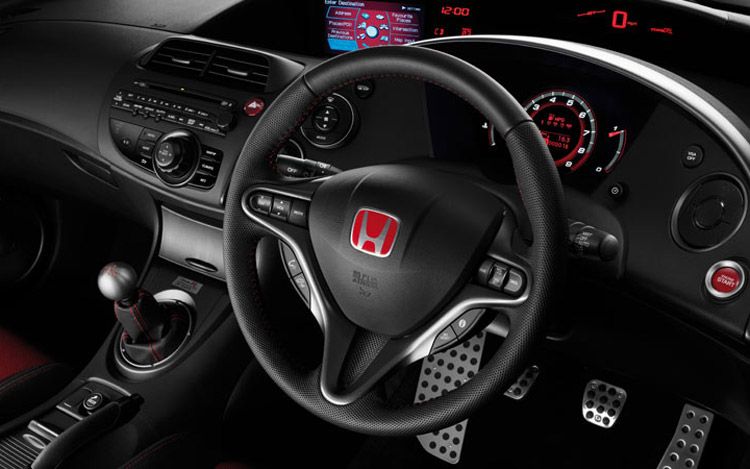
Honda Civic Type R InteriorsHonda Civic Type R View Interiors

Honda Civic Type R

People say school days are the best days of your life but I disagree. For me university was quite simply brilliant fun (and hard work I promise), for three years which quite frankly outstrips anything else I've encountered. Whether it was learning about something I actually had an interest in (handily for this article I studied journalism), the social aspect which encompassed partying, constant football playing and music shopping, or living away from home and growing up, I'm not sure. Throughout the three years there was one motivation to actually sit down and write my essays and it was a picture on my bedroom wall. Neither of Kelly Brook, nor great literature scholars but of a Honda Civic Type R.

The thing I loved about the Honda was that the standard Civic was so boring to look at and drive that you seemingly needed at least 65 years of life experience before being able to own one. Don't get me wrong, just because it was boring to drive doesn't mean it wasn't a good car, it was just very safe and sensible and, well it was for old people. The Type R badge didn't just add a few thousand pounds to the price tag; it transformed the retirement home company car into a snarling piece of motoring exotica that I aspired to own one day if I studied hard.

I'd struggle to win the argument that it looks much different from the standard model, with 17 inch alloy wheels, a rear spoiler and twin exit exhaust the only obvious external differences. This however was more than enough for me to start salivating and by the time I read the performance figures I needed oxygen. A 2 litre VTEC engine lurked under the bonnet producing 197bhp, revving to a crazy 8,250rpm and dragging the car from 0-60mph in a mere 6.6 seconds. To put it more succinctly, it was as if Honda had strapped a rocket to a mobility scooter.

Inside you weren't met with the most luxurious cabin but racing seats, white dials and a brushed aluminium gear knob offered further evidence that speed really was the only priority for this car. The gearbox is mounted on the dashboard which appears odd at first but it falls so easily to hand and changes so slickly, you'll be converted in minutes. Despite it being front wheel drive, the car handled superbly thanks in no small measure to it's expensive independent rear suspension (something Honda have skimped on with the latest derivative) and communicative feedback through the steering wheel.

Quite rightly in the little Honda's lifespan (2001 - 2006) it became the biggest selling fast hatchback, smashing all modest targets Honda HQ in Japan had. Priced at a tad under £16,000 and delivering all you could want in a driving experience, this was hardly a surprise.

The big question then is, three years on from graduating from university do I have a Honda Civic Type R on my driveway? Um, no but my 'I really want one of those' radar is still twitching very strongly. The very exciting news however is that prices are now reaching a level where this extraordinary car is accessible to the majority - and very possibly me too. A low mileage four-year-old car is now valued at £8,000 (add £400 for air conditioning).

This being a Honda, there should be very little to worry about with a car of this age, the VTEC engine is one of the most reliable in the world and the car itself is well put together, so don't expect to find doors hanging off. As with any used car though it's important to check some key points.

Firstly the car was available in red, black and silver. If the one you're looking at is white it's an import from Japan which may have an extra 20bhp but will be difficult to insure, will depreciate quickly and will have your Honda dealer running for the horizon. The turning circle isn't great on the Type R so check the alloy wheels for signs of a struggle against the kerbs and whilst you're there, have a look at the side skirts for speed hump damage.

Other than that the Type R is as widely praised now as it was when new and with the new model now on sale this version should become more readily available. As a final plus point (if one was needed) it's faster and handles better than the new model. Right I can't wait any longer...I'm off to buy one.

READ MORE - Honda Civic R Type White Bodykit Style

Monday, July 13, 2009

Saturday, July 11, 2009

Thursday, July 9, 2009

Cristiano Ronaldo sells luxury cars

The 24-year-old, who became the most expensive player in football history when he joined Real for £80 million this month, is putting three of his cars up for sale for a total of £195,000. Friends believe the former Manchester United footballer may also sell his £4 million mansion in Alderley Edge, Cheshire, and some of his furniture and clothing. Ronaldo is
READ MORE - Cristiano Ronaldo sells luxury cars

Wednesday, June 24, 2009

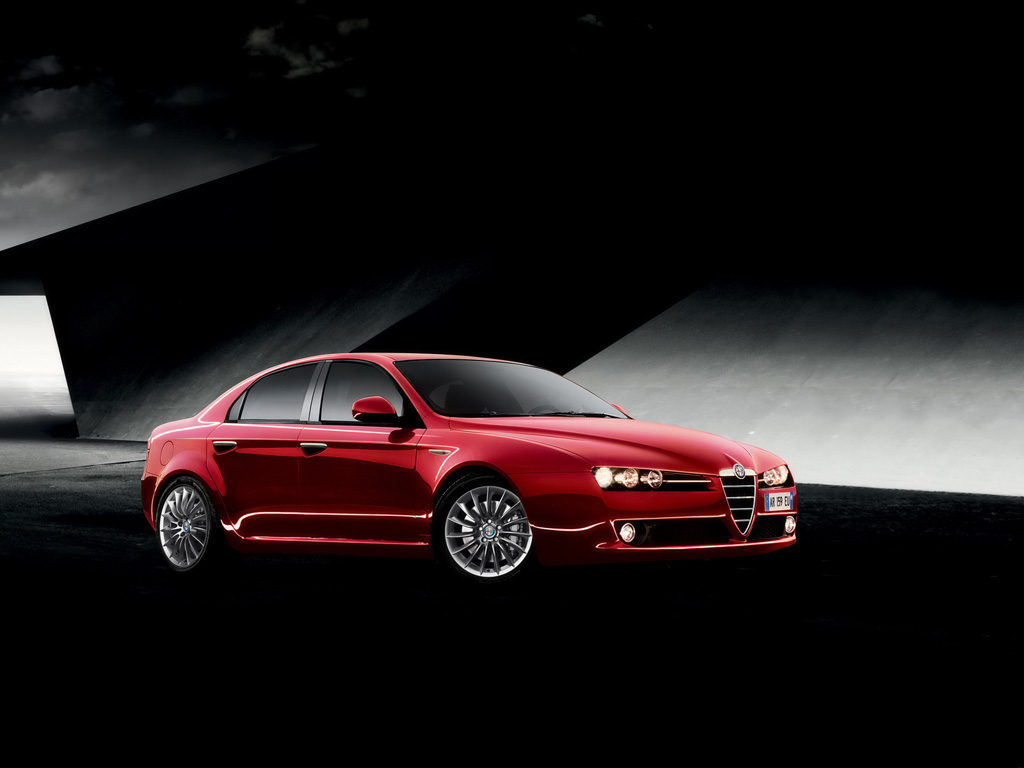
2009 Alfa Romeo 159

The 2009 Alfa Romeo 159 is a four door high performance luxury car.

The Alfa Romeo 159 was first displayed at the Geneva Motor Show, it features muscular looks, powerful engine, stylish body structure and exteriors. The Alfa Romeo 159 features a powerful 1.75 L Incline-4 turbocharged petrol engine with direct fuel injection and controlling system that carefully controls the engine at all conditions.
READ MORE - 2009 Alfa Romeo 159

Sunday, June 14, 2009

Ferrari F430 Scuderia

READ MORE - Ferrari F430 Scuderia

Ferrari California

READ MORE - Ferrari California

Thursday, April 16, 2009

2009 BMW 750Li: The Best Luxury Sedan

The 400-horsepower BMW 750Li has rear-wheel steering. Below 40 miles per hour, the rear wheels can turn as much as 3 degrees opposite the direction of the front wheels, thereby reducing the big car’s turning radius.

I'm quite certain that somewhere right now, emotionally shattered BMW technicians are gathering in a church basement for a support group, huddled around the cookies and the coffee urn, their hands fairly vibrating with frustration. For as well deserved as is the title Ultimate Driving Machine, BMWs also have earned the reputation as the Ultimate Hangar Queen, taking up residence in dealership service bays and sending mechanics over the crumbling edge of insanity. Hello -- sob! -- my name is Dieter and I'm a BMW tech . . . . Hello, Dieter, keep comin' back. . . .

Yes, BMWs have middling initial quality and distinctly less-than-middling reliability -- so sayeth J.D. Power -- but people still buy them and adore them, because they are inarguably spectacular cars. Even the BMWs that I loathe are great cars. The new 135i is uglier than a Radcliffe glee club, but it's also fierce, fervid, delicious, a bottle of Bollinger that's lost its cork.

And then there's this car, the 2009 BMW 750Li, the flagship of BMW's starfleet, which might be -- one hates to draw lines in this particular sand -- the best luxury sedan in the world. Oh, sure, it could be better. It could run on the tears of disgraced CEOs or cure warts of the keister. But as an executive saloon, as a synthesis of power and grace and ease and prestige, the new 7-series demands that we reset our calipers, raise our ceilings and throw out our measuring sticks. There is now a new standard.

And yet, the 750Li boldly/daringly/foolishly leverages its greatness on the fulcrum of one of the company's perennial weaknesses: electronics. This car comprises a blazing amour fou of control modules, sensors, microcontrollers, solenoids and mechatronic actuators, all wired together with the CAN-bus network from hell.

Our fully optioned $110,170 test car provides an acute example. Among the systems: night vision display with enhanced pedestrian detection; active blind-spot detection; lane-departure warning; park-distance control; head-up display; adaptive headlights with high-beam "assistant"; three high-resolution cameras on the rear deck lid and front fenders.

Of course, there's an 80-gigabyte, hard-drive-based navigation system, satellite radio and premium audio system; and a completely redesigned version of the multifunction iDrive controller (the previous system was nicknamed "iQuit").

My favorite? The integral active steering system, which is to say, rear-wheel steering. Below 40 miles per hour, the rear wheels can turn as much as 3 degrees opposite the direction of the front wheels, thereby reducing the big car's turning radius. Great for parking and tight city traffic. Above 40 mph, the wheels turn in phase with the front wheels to increase handling responsiveness, cornering and agility.

Does integral active steering perform as advertised? Has Hasselhoff had work? This car runs like mighty winged Pegasus, carving mountain roads and dicing switchbacks as if it were an M3 with a pituitary problem. No big car has ever had so much rail-to-rail slaloming agility, such effortless composure at the limit. It's uncanny, it's eerie, it's surreal.

Indeed, the effect of all these electronics is to knit together a kind of digitized meta-reality where the surly bonds of physics have slipped a bit, a place where this enormous, heavy sedan can dance like a sports car. Think of it like the world of "The Matrix," inside of which Keanu Reeves can fly, or act.

And so we arrive at the truest portrait of the 750Li: half machine, half machine code; a kinetic sculpture, partly aluminum and steel, partly a stream of zeros and ones. Wonderful, epic, historic.

But can you trust it?
I really don't know. On the one hand, I'm utterly smitten by the technology. I love piloting a leather-lined spaceship with a 20-way adjustable captain's chair with heating/cooling and massage function.

There are moments on the interstate at night -- when the ghostly thermal-imaging night-vision display is on, the head-up display is reading out navigation messages, the lane-departure warning system is gently reminding me to use my turn signals, and all is bathed in serene LED cabin light -- that the 750Li really feels like something that comes after the Automobile.

Still, I'm nagged by doubt. All of these exotic systems, such as the head-up display (Nippon Seiki), lane-change warning (Hella) and night vision (Autoliv) come from suppliers in Japan, Germany and Sweden, respectively. The 750Li is practically the U.N. of Tier 1 suppliers. Considering the state of global comity, a question occurs to me: Can they all get along?

Bear in mind, all of this gear is overlaid on the car's, the brand's already fraught electronics: the e-throttle-equipped 4.4-liter, 400-horsepower, twin-turbocharged V8 with variable valve timing on intake and exhaust cams; the adaptive six-speed ZF transmission; the adaptive dynamics system, which itself has four distinct modes (Comfort, Normal, Sport and Sport+), which ratchet up performance thresholds for the engine, transmission, brakes, steering and stability control. The braking module governs anti-lock, traction and stability control, brake "drying," brake-fade compensation. . . . It just goes on and on.

What few buyers appreciate is how difficult systems integration is on a car like this. For the BMW 750Li to work, every system and subsystem has to mind-meld with the others in a cold chatter of instant, endless algorithms, faultlessly, every time, forever and ever, amen. No wonder they go buggy.

So when I say the 750Li is the best luxury sedan in the world, imagine a weather-balloon-size asterisk. I guess, as long as it starts, it is.
READ MORE - 2009 BMW 750Li: The Best Luxury Sedan

Friday, April 3, 2009

2010 Audi R8 5.2 V10 FSI Quattro Road Test

A bigger stick for the soft-spoken supercar, and a price to match.

By making available an R8 with a monster 525-hp V-10 engine—complementing the 420-hp V-8 model that was introduced two years ago—Audi has elevated its exotic-looking two-seater from “almost-a-supercar” status to a true competitor in the high-performance realm above mere sports cars.

The 105-hp increase comes from a 5.2-liter, direct-injection V-10 that is virtually identical to the engine found in the Lambor ghini Gallardo LP560-4.

Unique engine programming and intake and exhaust systems are the chief differences in the Audi engine over the Italian job, although both engines are made in the same plant in Hungary.

We’re told that the V-10 weighs just 68 pounds more than the V-8, and that fuel economy with the bigger engine will worsen by only 1 mpg.

Output is listed by Audi at 525 horsepower and 391 pound-feet of torque, 27 horses and seven pound-feet fewer than in the Lambo, but we suspect some of that difference is simply marketing.

With the help of launch control, a first for the R8’s manual transmission, we managed the 0-to-60 dash in 3.7 seconds and a quarter-mile in 11.8 seconds at 121 mph.

That’s a full second quicker in the quarter-mile than we recorded in a manual-transmission V-8 R8 and dead even with a Porsche 911 GT2. This was measured in a down-and-dirty test run during a preview drive in Spain.

Lamborghini owners need not fret that this R8 will steal the Gallardo’s thunder, as the V-10 R8’s numbers are quite a few ticks behind those of the automated-manual LP560-4 we tested in February.

A more formal test with the paddle-shifted transmission should improve our times, but still, we don’t see a lot of cross-shopping between these corporate cousins.

The Lamborghini is a car for extroverts—loud, brash, in your face. The Audi is more of a speak-softly-and-carry-a-big-stick car. The exhaust—quiet during relaxed driving and escalating in volume above 4000 rpm—never fully intrudes on the serenity in the cockpit until you approach the 8700-rpm redline (700 more than the V-8’s and 200 higher than the Lambo’s).

The extra oomph is obvious as soon as the R8 5.2 starts moving, but the power increase hasn’t upset the R8’s user-friendliness and neutral handling. Easy driving is still the name of the game; both models have graceful manners even when driven hard around a track.

Visual differences between V-8 and V-10 R8s are slight. The V-10 model has wider intakes behind the doors, which sit atop wider body sills. In front and back, the black accents are glossy instead of flat, and there are two crossbraces to the air intake rather than three.

The V-10 R8’s exhaust tips are larger and oval-shaped, and this model also sports standard LED lighting, previously an option. The seats, a carry-over from the V-8 model, had us at times wishing for more lateral support.

We’re pleased the R8’s optional ceramic brakes might make it to North America. They’re strong, completely free of fade, and—unlike the on-off brakes in the Gallardo—can actually be modulated for smooth driving.

Audi won’t pinpoint when the V-10 R8 will go on sale or what it will cost. We’ll bet on late this year at the earliest, with a premium of maybe $45,000 over the V-8 R8’s $117,500 base price.

READ MORE - 2010 Audi R8 5.2 V10 FSI Quattro Road Test

LinkWithin

Related Posts Plugin for WordPress, Blogger...